


Rated ★4.7
by 1,766+ Customers


4.7
Rating by 1766+ Customers
Understanding Water Hardness in Midland, TX Homes
Voted Midland’s Favorite 6 Years In A Row!
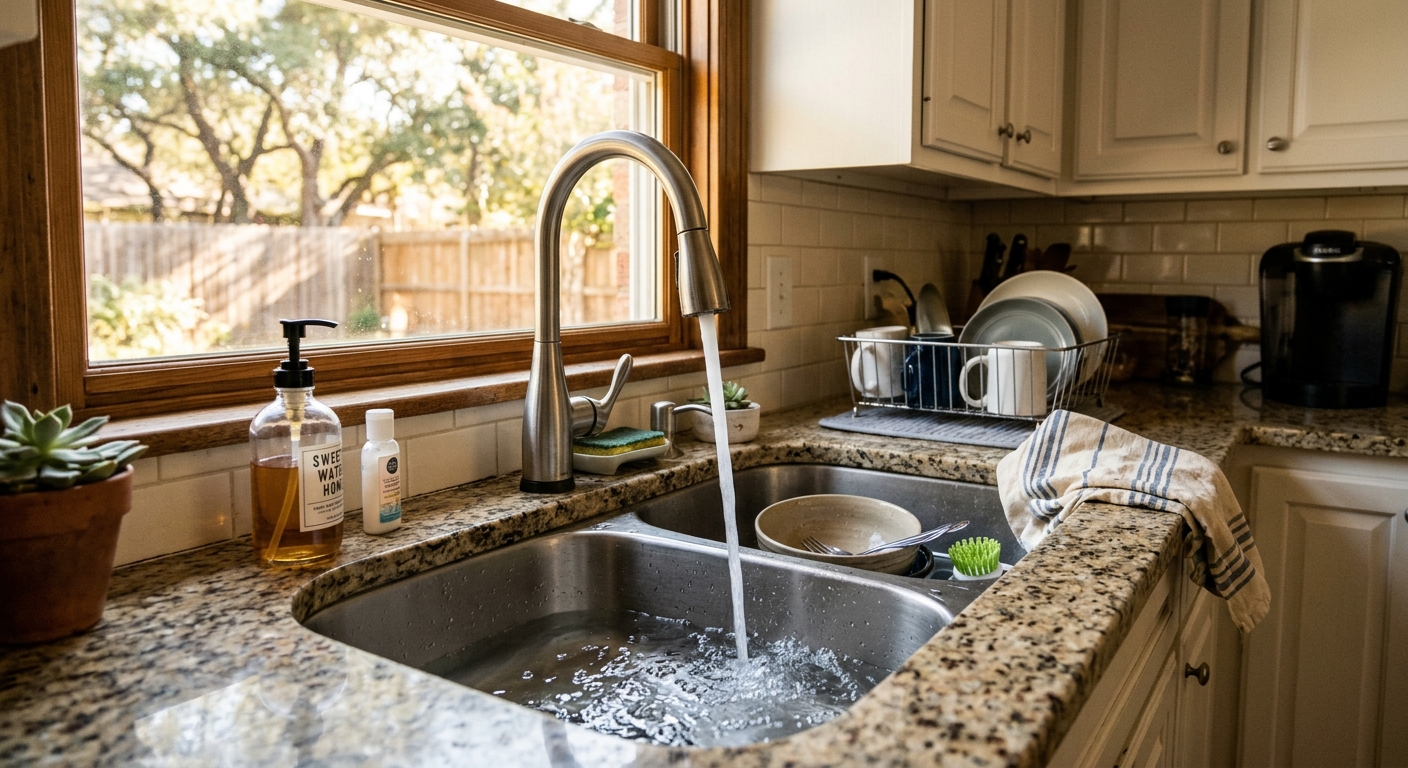
Midland’s water is hard, which is a direct result of the mineral-rich groundwater the city draws from. While hardness isn’t a health or safety concern, it’s one of the most consistent, day-to-day issues Midland homeowners deal with, from scale buildup in pipes to appliances that wear out faster than they should.
This guide breaks down what water hardness actually means, why Midland’s levels run especially high, and what you can do about it.
Wondering how hard your water really is? Talk to D&D’s plumbing team about testing and softening options for your home.
What Is Water Hardness?
Water hardness refers to the concentration of dissolved calcium and magnesium in your water supply, measured in milligrams per liter (mg/L) as calcium carbonate. The more of these minerals present, the “harder” the water is considered, and the more noticeable its effects become around your home.
According to the U.S. Geological Survey, water is generally classified into four hardness categories:
| Classification | Hardness Level (mg/L as CaCO₃) |
| Soft | 0–60 |
| Moderately hard | 61–120 |
| Hard | 121–180 |
| Very hard | More than 180 |
Importantly, hardness isn’t regulated as a health or safety issue. Calcium and magnesium aren’t toxic, so the EPA’s National Primary Drinking Water Regulations don’t include a legal limit for hardness the way they do for contaminants like arsenic or lead. Hardness is purely a practical, household-level concern, not a compliance one.
Why Is Midland’s Water So Hard?
Midland’s water hardness comes down to geology: much of the city’s water is drawn from groundwater sources, including the Ogallala (High Plains) Aquifer, which naturally accumulates high concentrations of calcium and magnesium as water moves through limestone and other mineral deposits underground. This is a regional pattern, not something unique to Midland’s treatment process.
West Texas as a whole is known for some of the hardest water in the country. As water travels through the ground before reaching a treatment plant, it dissolves minerals from the rock and soil it passes through, and areas with limestone-heavy geology, like much of the Permian Basin, tend to produce especially hard water as a result.
How Do You Know Your Water Is Hard?
Most Midland homeowners notice the effects of hard water long before they see an actual number attached to it. A handful of everyday signs tend to show up consistently in homes without any water softening in place.
Common signs of hard water include:
- White, chalky buildup around faucets, showerheads, and drains
- Soap and shampoo that don’t lather well, leaving a filmy residue behind
- Spots on dishes and glassware, even fresh out of the dishwasher
- Dry, itchy skin or dull-feeling hair after bathing
- Visible scale inside kettles, coffee makers, or around water heater elements
If several of these sound familiar, there’s a good chance your home’s water falls into the “hard” or “very hard” range on the scale above.
How Hard Water Affects Your Home
Hard water doesn’t pose a health risk, but it creates real, ongoing wear on your home’s plumbing, fixtures, and appliances that adds up significantly over time. This is where most homeowners actually feel the impact of Midland’s water.
Plumbing and Pipes
Mineral deposits from hard water gradually build up inside pipes, a process called scaling, which narrows the interior diameter of the pipe over time. Reduced pipe diameter means reduced water flow and pressure, and in more severe cases, can contribute to clogs and even pipe damage over many years of exposure.
Appliances
Water heaters, dishwashers, washing machines, and coffee makers all take on extra strain from hard water, since mineral buildup inside these appliances forces them to work harder to perform the same job. Water heaters are especially affected, as scale buildup on heating elements reduces efficiency and can shorten the unit’s overall lifespan.
Skin, Hair, and Laundry
Hard water makes it more difficult for soap and detergent to fully lather and rinse away, which is why many people notice dry skin, dull hair, and stiff, faded laundry in homes without softened water. This happens because mineral ions interfere with soap’s ability to dissolve completely, leaving behind residue rather than rinsing clean.
When It Comes to Water, How Hard Is Too Hard?
Once water hardness crosses into the “hard” range (121 mg/L and above), most homeowners start noticing the effects described above, and many choose to address it once it reaches the “very hard” category above 180 mg/L. Midland’s groundwater sources commonly test in the hard to very hard range, which is part of why hard water complaints are so consistent throughout the area.
There’s no single hardness level that applies to every property, since factors like your specific water source, neighborhood, and even the age of your home’s plumbing can all influence exactly what comes out of your tap.
How to Test Your Home’s Water Hardness
The only reliable way to know your home’s exact hardness level is a water test, either through a simple at-home test kit or a professional assessment. A professional test gives you a precise mg/L reading, along with insight into any other minerals or conditions specific to your property.
A professional water test typically involves:
- Collecting a water sample directly from your home’s plumbing
- Testing for calcium and magnesium concentration, the primary drivers of hardness
- Reviewing the results to determine where your water falls on the hardness scale
- Recommending a solution sized correctly for your home’s water usage and hardness level
Many plumbing companies, including D&D, offer water hardness testing as part of a broader service visit, making it easy to get a clear answer without a separate appointment.
How to Soften Hard Water
A water softening system is the most effective long-term solution for hard water, since it directly removes the calcium and magnesium responsible for scale buildup before it ever reaches your plumbing and appliances. Softening isn’t a one-size-fits-all decision, though, and the right system depends on your home’s hardness level and water usage.
Common softening solutions include:
- Salt-based ion exchange softeners, the most common and effective method for significantly reducing hardness
- Salt-free water conditioners, which alter mineral structure to reduce scale buildup without removing minerals entirely
- Whole-home systems, which treat water hardness at the point it enters your home, protecting every fixture and appliance downstream
Why Choose D&D for Water Hardness Solutions
D&D Home Services has helped Midland homeowners manage the region’s notoriously hard water since 1984, and our team can test, diagnose, and recommend the right softening solution for your specific home. We know West Texas water because we’ve been treating it for decades.
What sets us apart:
- Decades of local experience with West Texas water hardness and its impact on home plumbing
- Licensed, experienced technicians who test before they recommend a solution
- Transparent pricing, with free estimates before any work begins
- Flexible financing to make water softening accessible for any budget
- A trusted local reputation, voted Midland’s favorite service provider since 2010
Ready to do something about your hard water? Contact D&D Home Services or explore our plumbing and water treatment services today.
Frequently Asked Questions
Is hard water dangerous to drink?
No. Calcium and magnesium, the minerals responsible for hardness, aren’t toxic and don’t pose a health risk. Hardness is a household nuisance issue, not a safety concern.
How much does a water softener typically cost to install?
Costs vary based on system size and type, but most whole-home softening systems fall within a range that a technician can quote after testing your specific water hardness and household usage.
Will a water softener eliminate hard water spots completely?
A properly sized softener significantly reduces mineral content, which greatly reduces spotting and buildup, though some residual mineral content can still appear depending on the system and your water usage habits.
How often does a water softener need maintenance?
Salt-based softeners typically need salt refills every few weeks to a couple of months, depending on household water usage, along with periodic system checks to confirm everything is functioning properly.
Can I test my water hardness myself?
Yes, at-home test strips are widely available and can give you a general sense of your hardness level, though a professional test provides a more precise reading and can identify other water quality factors specific to your home


Fast, Reliable Home Comfort Services