


Rated ★4.7
by 1,770+ Customers


4.7
Rating by 1770+ Customers
Indoor Air Quality in Midland, TX: A Homeowner’s Guide
Voted Midland’s Favorite 6 Years In A Row!
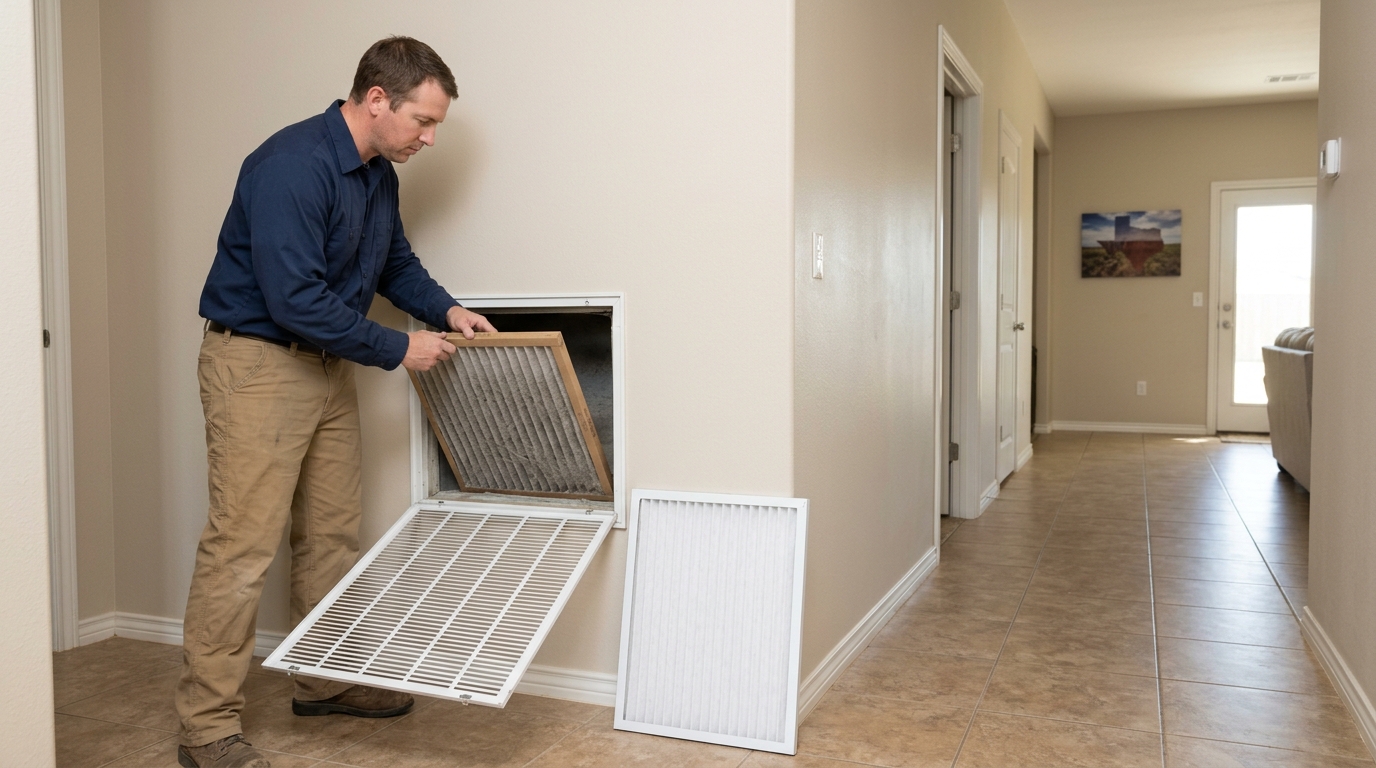
You wipe down the shelves on Saturday morning, and by Saturday night a fine layer of dust is back. Anyone who lives in Midland knows the feeling. The wind blows, the air is dry, and the dust finds its way inside no matter how often you clean. That dust is part of your home’s indoor air quality (IAQ), the condition of the air you and your family breathe every day. Midland’s dust, wind, and dry climate make IAQ worth your attention. In this guide, we’ll explore what affects your air, which fixes can help, and when to call a professional.
Need help with your home’s air? Talk to D&D Home Services. Call 432- 687-1011 or contact us online. We answer emergency calls 24/7.
What Is Indoor Air Quality?
IAQ describes the air inside and around buildings, and how it affects the comfort and health of the people in them. Several things influence IAQ:
- Sources that release particles or gases inside the home
- How much fresh air moves through the house
- Moisture and humidity levels
- The condition of your heating and cooling system
The EPA notes that poor ventilation lets pollutants build up. It also says people react differently to the same exposure, so one family member may notice problems while another does not.
Common Indoor Air Pollutants
The most common household pollutants are dust, pollen, pet dander, volatile organic compounds (VOCs), mold, and moisture problems. Each one gets inside the home differently, so it’s important to know where they come from and what signs to watch for.
| Pollutant | Where it comes from | What to watch for |
| Dust | Outdoor air, clothing, carpets, worn filters | Layers of dust that return quickly |
| Pollen | Open doors, windows, and leaky ducts | Sneezing and itchy eyes in spring and fall |
| Pet dander | Cats, dogs and other furry pets | Lingering allergy-like symptoms indoors |
| VOCs | Cleaners, paints, air fresheners, some furnishings | Strong chemical smells |
| Mold | Damp areas, leaks, condensation | Musty odor or visible spots |
| Humidity extremes | Weather, HVAC settings, leaks | Dry skin or sticky, damp air |
Why West Texas Air Needs Extra Attention
Midland homes face dust, wind, and dry air more than many other parts of the country, which means homeowners in the Permian Basin need to be well aware of conditions that can affect IAQ.
Dust and Wind
Wind carries fine dust across the region. Small gaps around doors, windows, and ductwork let some of it inside.
Dry Climate
Dry air is normal here, especially in winter. Low humidity can leave skin and throats feeling dry. It also helps dust stay airborne.
An Oil-Field Area
Midland sits in a busy oil-producing region. Homeowners near industrial activity may notice outdoor odors or extra dust. A tight, well-filtered home with proper ventilation gives you more control over what stays inside.
Signs Your Home’s Air May Need Help
You may have an IAQ problem if you notice repeated symptoms or odd conditions at home. The EPA says short-term effects can include eye, nose, and throat irritation, headaches, dizziness, and fatigue. It also says asthma symptoms may appear or get worse.
Look for these clues:
- Dust that builds up fast, even after cleaning
- Musty or stale smells
- Rooms that feel stuffy, damp, or very dry
- Visible mold or condensation on windows
- An HVAC system that runs often but cools or heats unevenly
These signs do not prove an air problem, and it is always recommended that you talk to your doctor about any health concerns.
How Your HVAC System Affects Air Quality
Your HVAC system circulates all the air in your home, which means it can either spread pollutants or help reduce them. Three parts matter most.
- The filter. It catches particles as air passes through.
- The ducts. Leaks in the ducts can pull in dusty attic air. Damaged sections can hurt airflow.
- The coil and drain. Moisture here can encourage mold growth if the system is not maintained.
The EPA points out that a furnace or air conditioner filters air only while it runs. That is often less than 25% of the time in heating and cooling seasons, according to the EPA’s guide to home air cleaners.
Solutions That Can Help Reduce Indoor Pollutants
No single product fixes every air problem. Start with the basics, then add equipment that fits your home.
Better Filters and MERV Ratings
A higher-rated filter can help reduce fine particles. MERV is a standard rating for how well a filter captures particles. The EPA recommends a filter rated MERV 13 or the highest rating your system can handle. It also advises replacing filters every 60 to 90 days, or sooner when they look dirty.
Check with a technician before upgrading. A very dense filter can restrict airflow in some systems.
Air Filtration and Purification
Whole-home filtration and air purification systems can help reduce particles and odors. D&D Home Services provides indoor air quality services that include air filtration and air purification. Here are some things to consider:
- Look for devices tested to produce little or no ozone.
- Avoid products that intentionally make ozone. The EPA says it is a lung irritant.
- Know the limits. The EPA says filtration does not replace source control and ventilation.
Humidity Control
The EPA advises keeping indoor humidity below 60%, ideally between 30% and 50%, as described in its guide to mold and moisture. In Midland, dryness is the more common concern. Fix leaks, run exhaust fans, and talk to a pro about whole-home humidity control if levels stay outside that range.
Ductwork and Insulation
Sealed, well-insulated ducts can help limit dust and outdoor air from entering your system. D&D recommends ductwork or insulation upgrades when an evaluation finds leaks, damage, or airflow problems.
Ventilation
Fresh air dilutes indoor pollutants. Use bathroom and kitchen exhaust fans, and open windows when outdoor dust and wind are low.
Regular Maintenance
Routine service keeps the system clean and efficient. A tune-up can include checking the filter, coils, and airflow.
When to Call a Professional
Call a licensed HVAC professional when simple steps do not solve the problem.
Call when you notice:
- Visible mold or a persistent musty smell
- Weak airflow, hot or cold rooms, or ducts that look damaged
- Dust that returns within days
- Humidity that stays too high or too low
- An HVAC system that is old, noisy, or running constantly
- Questions about filters, purifiers, or UV products
If you smell gas or suspect carbon monoxide, leave the home and call emergency services first.
Why Midland Homeowners Choose D&D Home Services
We are a family-owned Midland company that has served the area since 1984. Three generations of our family have built this business, and here is what you can expect from us:
- Licensed in Texas. We hold a Texas air conditioning license and a Master Plumber license, RMP-44438.
- Local office. You can find us at 1101 W. Florida Ave, Midland, TX 79701.
- Wide service area. We serve Midland, Odessa, and the Permian Basin, including Andrews, Big Spring, Crane, Gardendale, Monahans, Stanton, and West Odessa.
- Indoor air quality services. We offer filtration, purification, and humidity control, plus ductwork and insulation improvements when an evaluation calls for them.
- Heating and cooling. We handle AC and heating repair, installation, and maintenance tune-ups, plus heat pumps and ductless mini-splits.
- 24/7 emergency dispatch. We answer calls around the clock.
- Elite Comfort Membership. The plan starts at $15 per month. It includes two HVAC tune-ups a year, a plumbing visual inspection, priority service, and 10% off HVAC and plumbing parts.
[CTA] Ready for cleaner, more comfortable air? Call 432- 687-1011 or contact us online. We answer emergency calls 24/7.
Frequently Asked Questions
What Is the Biggest Cause of Poor Indoor Air Quality?
There is no single biggest cause, because it depends on the home. The EPA names many sources, including cleaning products, building materials, heating and cooling systems, moisture, and poor ventilation. A professional evaluation can help pinpoint yours.
Does a MERV 13 Filter Help in Midland?
A MERV 13 filter can help reduce fine particles like dust, and the EPA recommends that rating or the highest your system can handle. Not every system can run one without losing airflow. Ask a technician to confirm what fits your equipment.
Can an Air Purifier Cure Allergies?
No. Air purifiers and filters can help reduce airborne particles, but they do not cure allergies or illness. Talk to your doctor about symptoms, and use equipment as one part of a broader plan.
What Humidity Level Is Best for My Home?
The EPA advises keeping indoor humidity below 60%, ideally between 30% and 50%. Midland’s dry climate may leave you below that range in winter. A hygrometer, available at most hardware stores, shows your current level.
How Often Should I Change My HVAC Filter?
The EPA says to follow the manufacturer’s guidance, typically every 60 to 90 days. Change it sooner if it looks dirty. Homes with pets, heavy dust, or frequent wind may need more frequent changes.


Fast, Reliable Home Comfort Services